
Diet & Nutrition for Fibromyalgia:
Foods to Avoid

You control what you eat, so it makes sense to ask whether diet can help fibromyalgia. Research suggests certain food ingredients may worsen symptoms, while specific diets, supplements, or weight-loss strategies may reduce pain and fatigue for some people.
The five nutrition approaches below target different abnormalities reported in fibromyalgia. One approach may help even if another does not.
Most diets aim to lower inflammation because inflammation can increase pain sensitivity and fatigue. Some also avoid foods that may irritate the intestinal lining. Before starting a restrictive diet, ask a dietitian for guidance so you do not miss essential nutrients. Our article Covering the Bases on Nutrition offers several key points.
Removing Food Additives
Most people know MSG, or monosodium glutamate, as a flavor enhancer in processed foods. But glutamate also acts as an amino acid that can overstimulate nerves when levels rise too high. Aspartate and cysteine may also irritate nerve endings.

Researchers have found elevated glutamate in people with fibromyalgia, including in the gut, blood, spinal fluid, and brain. Because glutamate strongly transmits pain signals, higher levels may help fuel widespread pain.
In a four-week trial, patients who avoided foods with glutamate reduced their fibromyalgia symptoms by more than one-third, and more than 80 percent improved. For details on the diet, label-reading tips, and foods to avoid, read more.
Fibromyalgia Diet:
Fewer Calories
Weight loss can help because extra pounds may worsen function and make exercise harder. But researchers found something unexpected: patients reported substantial pain and symptom improvement within three weeks of starting a calorie-restricted diet, before they lost much weight.1

How could eating fewer calories reduce fibromyalgia symptoms so quickly? Fat cells release chemicals that promote inflammation and activate nerve endings. When calorie intake drops, the immune system can shift toward anti-inflammatory signals, which may reduce pain-related messages traveling to the nervous system.
In this study, patients received liquid food packets through a weight-loss center and consumed only 800 calories per day. More than 70 percent improved, but this type of program requires medical oversight and support. The study also shows how enlarged fat cells may worsen symptoms.
If insurance does not cover a weight-loss program, the anti-inflammatory diet below may be a better option.
Anti-inflammatory Foods
Certain foods trigger more inflammation than others, and researchers can assign foods an inflammation rating. In one study, fibromyalgia patients with higher dietary inflammation ratings also reported greater pain levels.2
A Western-style diet high in red meat, unhealthy fats, and refined sugars can worsen blood glucose, cholesterol, and inflammation. An anti-inflammatory diet shifts the focus toward fruits, vegetables, beans, nuts, fish, poultry, fiber, and virgin olive oil while limiting processed foods, sugar, unhealthy fats, and additives. Some plans also remove gluten or dairy if these foods irritate the gastrointestinal tract.
Many experts recommend a Mediterranean-style diet for fibromyalgia because it is rich in antioxidants, which help counter inflammation. For a list of foods commonly included in this diet, click here.
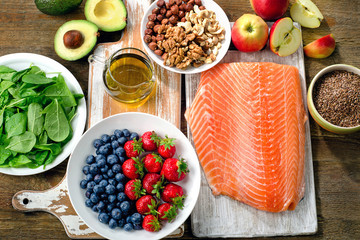
Changing your diet is hard, so treat it as a process rather than an all-or-nothing test. Track pain and fatigue with simple 0 to 10 ratings as you remove foods that may activate the immune system. In one study, three months of a rigorous anti-inflammatory diet reduced both symptoms by 30 percent.3
Gluten-Free Diet
Even without celiac disease, gluten may irritate the intestines in some people. Fibromyalgia research points to changes in gut bacteria that help protect the intestinal lining.4 If gluten irritates this immune-rich lining, it may increase cytokines that travel through the blood and sensitize nerve endings.
Gluten-free diet studies in fibromyalgia have produced mixed results. In one six-week trial, patients with gastrointestinal symptoms, especially diarrhea, were most likely to benefit.5 This subgroup made up nearly one-fourth of participants.
A six-month gluten-elimination trial produced stronger results.6 Participants reported a 25 percent improvement in pain and a 35 percent reduction in fatigue, sleep problems, and brain fog. Symptoms returned months later when gluten was reintroduced, suggesting the improvement was not just a placebo response.
A gluten-free diet avoids wheat, barley, rye, spelt, Kamut, and triticale. Bread and pasta can be hard to give up, but rice, quinoa, corn, buckwheat, and legumes may help. Because gluten-free products can be expensive and low in fiber, eat more fruits and vegetables or ask about gluten-free fiber supplements.
Low-FODMAP Diet
A low-FODMAP diet is one of the hardest diets to follow. The acronym stands for low fermentable oligo-, di- and monosaccharides and polyols. It limits fermentable sugars that can cause gas, cramping, and abdominal pain. Doctors often recommend it for irritable bowel syndrome (IBS), but only short term, usually one or two months, to get symptoms under control.
Although researchers developed this diet for IBS, roughly 40 percent of people with fibromyalgia also have IBS. If you are in this subgroup, a low-FODMAP diet may be worth discussing with a specialist. For a table of “Foods to Avoid and Foods to Enjoy,” click here.
A recent trial suggests this approach may reduce pain, fatigue, and sleep disruption in fibromyalgia. Patients followed the low-FODMAP diet for one month, then switched to an anti-inflammatory diet for two months, so the study cannot separate the effects of each diet. Because low-FODMAP diets are restrictive, a specialist should supervise them to prevent nutrient deficiencies.
Red Wine with Dinner?
Red wine is part of some Mediterranean-style eating patterns. It contains antioxidants and tryptophan and may reduce stress hormones, which could affect fibromyalgia symptoms. However, alcohol is not appropriate for everyone, especially if it worsens sleep, interacts with medications, or triggers other health concerns.
In a small Spanish study, fibromyalgia patients drank 5 ounces of red wine with dinner for one month.7 Compared with the control group, they reported lower pain and anxiety. The authors concluded that both the alcoholic and nonalcoholic components may have contributed to the benefit.
Nutritional Supplements

The supplements below may be beneficial for reducing your fibromyalgia symptoms.
- Magnesium: Magnesium supports muscle function, and low levels have been linked to greater stiffness in fibromyalgia patients.8 Low magnesium intake may also lower pain thresholds and increase pain.
- Omega-3 Fatty Acids: These oils have antioxidant and anti-inflammatory effects. They neutralize chemical byproducts that harm your cell membranes. The best formulas contain roughly 500 mg of EPA and 500 mg of DHA.
- Melatonin: This hormone regulates your body’s internal clock to help anchor your sleep-wake cycle but it must be taken at the same time each night. Melatonin is also a potent antioxidant that protects your brain cells.
- Palmitoylethanolamide (PEA) and Acetyl-L-Carnitine (ALC): Three trials in fibromyalgia patients show this combination may reduce symptoms.
- Vitamin D: Beyond supporting bone health, vitamin D may improve muscle strength and mood. Physical function improves in some fibromyalgia patients when vitamin D reaches the optimal range.8 Oil-based D3 formulas are best.
- Coenzyme Q10 (CoQ10): This enzyme helps cells produce energy for muscles and your brain. Fibromyalgia studies show mild symptom benefits. One chronic COVID trial using CoQ10 plus alpha lipoic acid also improved fatigue in patients, many of whom had fibromyalgia.9Oil-based gel caps are best but they can be expensive, so compare prices.
Get free treatment help delivered to your inbox when you join AFSA. Sign up for a free AFSA membership today.
Your support helps move fibromyalgia research forward. AFSA has funded seven studies in the past two years, all focused on diagnostic markers and more effective treatments.
Symptoms | Medications | Alternative Therapies | Muscle Pain Relief | Fibro Friendly Exercises
References for Fibromyalgia Diet & Nutrition
- Stubbs A, et al. ACR Open Rheumatol 5(5):464-469, 2022. Free Report
- Currea-Rodriguez M, et al. Pain Med 21(3):586-594, 2020. Free Report
- Silva AR, et al. Front Nutr 9:856216, 2022. Free Report
- Minerbi, Fitzcharles MA. Clin Exp Rheum 123(1):99-104, 2020. Free Report
- Almirall M, et al. Rheumatology 6:1069-1077, 2023. Free Report
- Bruzzese V, et al. Reumatismo 75(3):128-133, 2023. Free Report
- Gonzalez-Lopez-Arza MV, et al. Nutrients 15:3469, 2023. Free Report
- Tarsitano MG, et al. Eur Rev Med Pharmacol Sci 28(14):4038-4045, 2024. Free Report
- Barletta MA, et al. Clin Exp Med 23(3):667-678, 2023. Free Report