
Fibromyalgia Medications
for Pain, Fatigue, Brain Fog & Sleep

Medications, nondrug therapies, and self-help strategies are usually combined for treating fibromyalgia pain and fatigue, improving alertness or promoting sleep. Medications can be especially helpful because they do not take extra time or energy, and many are covered by insurance.
Most fibromyalgia medications act in the central nervous system (CNS) to improve the processes that regulate pain. The best strategy is to try only one new medication at a time so you can tell what helps and what causes side effects. Also, do not expect one drug to do everything. Most people with fibromyalgia need two to four medications to target different symptoms.
Many CNS-acting fibromyalgia medications may also relieve other painful conditions, such as irritable bowel syndrome or migraine. Doctors may also prescribe medications that target these overlapping conditions so they do not worsen your fibromyalgia pain.
Below is an overview of your medication options, including links to articles on how best to use each drug.
Medications for Fibromyalgia Pain
People often reach for nonsteroidal anti-inflammatory drugs (NSAIDs), such as aspirin or ibuprofen, or acetaminophen for common aches and pains. But fibromyalgia pain seldom responds to them because it’s more complicated. Research points to a breakdown in the body’s pain-control system, so doctors often prescribe medications that work on these pain-regulating pathways.
- Boosting Brain Chemicals: Serotonin and norepinephrine work together in the CNS to tone down pain-related messages. Raising both chemicals may improve your body’s pain-fighting ability. Two FDA-approved fibromyalgia medications that increase both transmitters are duloxetine and milnacipran (Savella).1,2 Another option is Tonmya, which was FDA-approved in 2025, although it is costly and not covered by most insurance companies. More sedating agents such as amitriptyline and cyclobenzaprine are usually taken at bedtime. Despite being antidepressants, doctors prescribe these medications for fibromyalgia because they can reduce pain.
- Slowing Down the Signals: Pain signals from sore muscles and other tissues travel to the spinal cord, where the nervous system can amplify them. Anticonvulsant drugs such as pregabalin (Lyrica) and gabapentin (Neurontin) can reduce this signaling by calming overactive nerve activity. Pregabalin is FDA-approved for fibromyalgia pain, and this drug may also improve sleep.3
- Relaxing the Muscles: People with fibromyalgia often have tight, knotted muscles that refuse to relax. Doctors may prescribe tizanidine or cyclobenzaprine to ease this tension. Both can cause sedation, so use caution during the day or take them only at bedtime.
- Low-Dose Naltrexone (LDN): Rather than targeting neurons, LDN quiets down overactive immune cells in the CNS.4 In fibromyalgia, these activated cells may disrupt nerve signaling and ramp up pain. An AFSA-funded trial found that LDN benefited one-third of patients, with mild side effects. Read about how LDN works, advice on giving LDN your best shot, and how to get it from a compounding pharmacy.
Sleep Meds
Many people with fibromyalgia wake up feeling stiff, achy, and unrefreshed, as though they did not get a wink of sleep. This happens because disrupted sleep does not restore the body the way healthy sleep should. Medications that target insomnia or limb movements during sleep may help some patients sleep more deeply and wake with less pain.
- Insomnia Meds: Non-restorative sleep may improve with insomnia medications or other sedating drugs. Several medication classes may help, including doxepin, pregabalin, Dayvigo, Quviviq, ramelteon, and eszopiclone. See our article Sleep Treatments for Fibromyalgia.
- Restless Legs Syndrome Drugs: Restless legs syndrome (RLS) and related limb movements during sleep occur in about one-third of people with fibromyalgia. Treating RLS may reduce nighttime movement and improve sleep quality. See our article on the diagnosis and treatment of RLS.
Fatigue & Brain Fog Relievers
After pain, most people with fibromyalgia rank fatigue as their second-worst symptom. This fatigue is far more severe than ordinary tiredness and can greatly limit daily function. If your thyroid function is normal and you are still too tired to get through the day, one of the medications below may help.
- Serotonin Boosters: Some medications that raise serotonin can feel alerting and may reduce fibromyalgia fatigue. Examples include fluoxetine, escitalopram, and sertraline.
- Alerting Agents: Modafinil and armodafinil raise dopamine and other neurotransmitters involved in wakefulness and mental focus, but they are regulated drugs. Bupropion also increases brain dopamine and is not regulated. It can improve mood and may provide mild fatigue relief.
- Learn More: See our articles on Fatigue Treatments and Reducing Brain Fog.
Other Medication Options
- Memantine: NMDA receptors can amplify incoming pain signals in the spinal cord, which may worsen fibromyalgia pain. Memantine blocks NMDA receptor activity and may also increase dopamine in ways that could improve cognition. However, higher doses can interfere with cognitive function.
- Lidocaine: Intravenous (IV) lidocaine shows promise for fibromyalgia pain, but it is costly and needs more research. Lidocaine patches and gels offer a more affordable option for localized muscle pain beneath the skin. These topical products are not practical for body-wide fibromyalgia pain, but they are available over the counter, so you can easily test them.
- Cannabis/Cannabinoids: Although controversial, medical cannabis may relieve pain and improve sleep for some people with fibromyalgia. Canada permits its use for fibromyalgia, and more than half of the states in the U.S. allow medical cannabis. An estimated 25 percent of patients report meaningful benefits.6 More research is needed, and one large AFSA-funded cannabis trial is already underway.
What to Try First
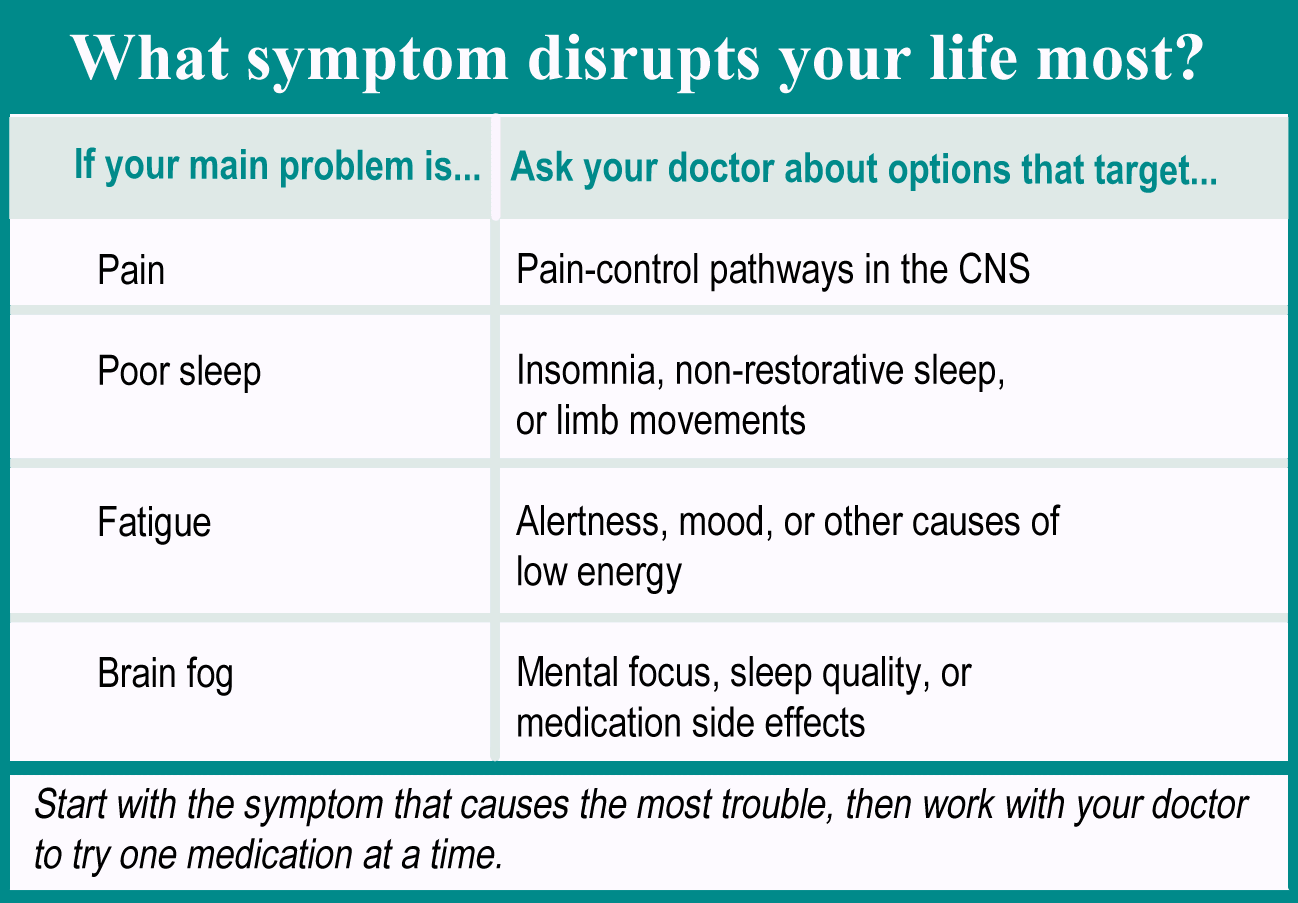
The best medication plan depends on which fibromyalgia symptom disrupts your life the most. When pain keeps you from functioning, start there. Poor sleep may leave you exhausted and achy, so treating sleep may improve daytime symptoms too. If fatigue or brain fog is your biggest problem, ask your doctor which fibromyalgia medication options best match those symptoms.
Work with your doctor to target one symptom at a time. When you try a new medication, track your progress and move on if it does not help within a month. This step-by-step approach makes it easier to see what helps, what causes side effects, and what is worth continuing. See our article: Considering a New Med?
Keep Up with New Treatments: Sign up for a free AFSA membership and receive our email newsletter on fibromyalgia medications, research, and practical treatment tips.
Your support helps move fibromyalgia research forward. AFSA has funded eight studies in the past two years focusing on better ways to diagnose and treat the disease.
To understand why fibromyalgia often requires several treatment approaches, see What is Fibromyalgia?, Managing Fibro Pain, and What Causes Fibromyalgia?
References for Fibromyalgia Medications
- Migliorini F, et al. J Orthopaed Surg Res 18:504, 2023. Free Report
- Pickering G, et al. Drug Des Dev Ther 12:2485-2496, 2018. Free Report
- Harris RE, et al. Anesthesiology 119(6):1453-64, 2013.
- Aitcheson N, et al. Aust J Gen Pract 52(4):189-195, 2023. Free Report
- Affaitati G, et al. Clin Therapeutics 31:705-720, 2009.
- Giorgi V, et al. Clin Exp Rheum 38(Suppl 123):53-59, 2020. Free Report