
Immune Targets for Fibromyalgia Treatment
Principal Investigator: Claudia Sommer, M.D.
University Hospital Wuerzburg, Germany

“Several studies suggest that the immune system plays a role in fibromyalgia for many patients,” says Sommer. “IgG autoantibodies seem to be involved, but we still do not know what they attach to or how they may lead to symptoms.” AFSA funded Sommer’s study to identify immune-based fibromyalgia treatment targets and explore how they may contribute to pain.
In autoimmune diseases, the immune system makes antibodies that mistakenly target the body’s own cells. These autoantibodies can damage cells or change how they work. In fibromyalgia, researchers think autoantibodies may affect how the body processes pain.
Finding the targets of these autoantibodies could open the door to more precise treatments and better blood tests. Sommer will also study whether signs of a “leaky” gut are linked to higher levels of autoantibodies.
Autoantibodies & Pain Signals
When researchers transfer IgG from fibromyalgia patients to mice, the animals develop widespread pain sensitivity within a day.1 IgG from healthy people does not cause this effect. This finding led researchers to ask what patient IgG might be doing in the mice.
They found that IgG antibodies from people with fibromyalgia clustered around the dorsal root ganglia. These small nerve hubs sit along the spinal cord and act like relay stations for sensory signals. They contain neurons and immune-support cells called satellite glial cells, or SGCs.
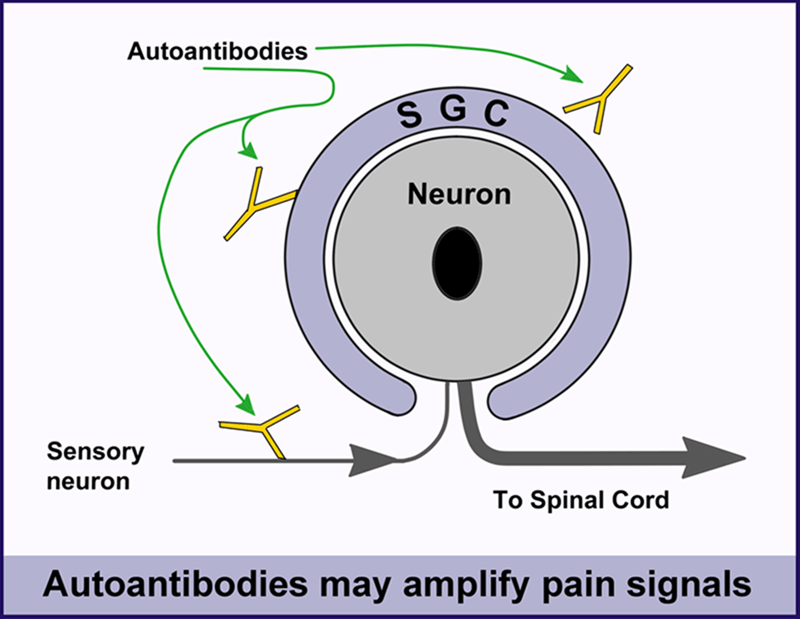
Early work suggested that IgG autoantibodies attached mainly to SGCs in mice and in healthy human tissue samples. But Sommer’s recent study shows that they may also latch on to the neurons.2 In either case, these autoantibodies may amplify pain and sensory signals before they reach the spinal cord.
The long-term goal is to block or intercept these autoantibodies before they disrupt pain signaling. To move toward that goal, Sommer will identify the proteins they attach to and map the precise molecular sites involved.
How It Works
Your body normally makes antibodies to fight foreign invaders, such as viruses. But when antibodies mistakenly target your own cells, they are called autoantibodies. The larger cell parts they attach to are called antigens. In simple terms, the autoantibody acts like the attacker, and the antigen is the target.
Sommer wants to identify these targets on SGCs and neurons. But her team will go one step further by studying epitopes—the exact tiny spots on an antigen where an autoantibody attaches. An antigen may contain hundreds of amino acids, while an epitope may be only 5 to 10 amino acids long.
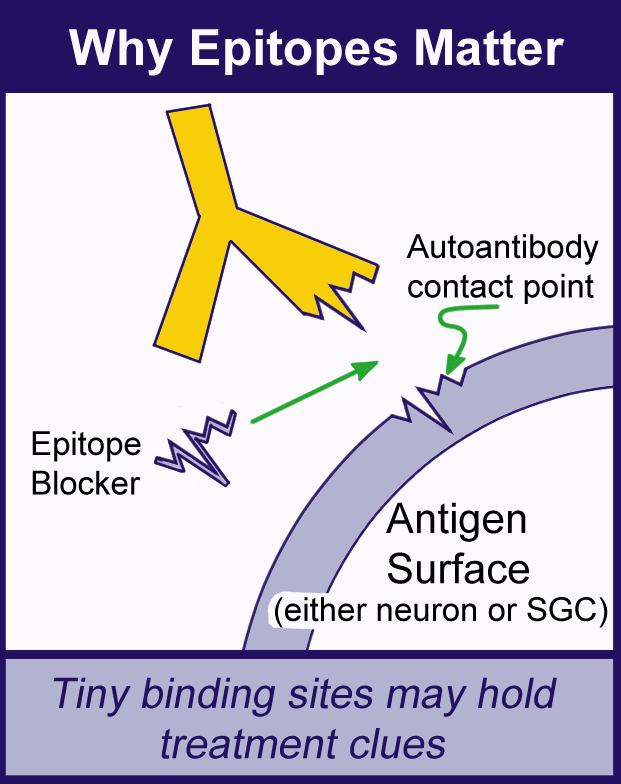
This level of detail matters because treatment may not need to block the entire antigen. If researchers can identify the exact amino acid sequence where an autoantibody binds, they may be able to design treatments that block that small contact point.
Think of the antigen as a lock and the epitope as the keyhole. The autoantibody acts like a rogue key that fits into the keyhole and may disrupt nerve signaling. If scientists can map the keyhole, they may be able to design ways to block the rogue key before it causes trouble.
In fibromyalgia, autoantibodies may attach to antigens on the surface of SGCs or neurons. This may change how these cells work and amplify sensory signals before they enter the spinal cord.
To find these epitope targets, Sommer will use advanced lab tools, including mass spectrometry and peptide microarrays. These methods will help her team search broadly for the most important immune-based fibromyalgia treatment targets.
Why Symptoms Differ
Many fibromyalgia patients have autoantibodies that bind to SGCs or nearby neurons. In antibody-positive patients, Sommer found several possible binding sites.2
These binding sites may help explain why symptoms vary from one person to another. For example, antibodies near pressure-sensitive neurons were linked to more numbness and pain. Antibodies near heat-sensitive neurons were associated with more burning pain, while antibodies near SGCs were linked to more stabbing pain.
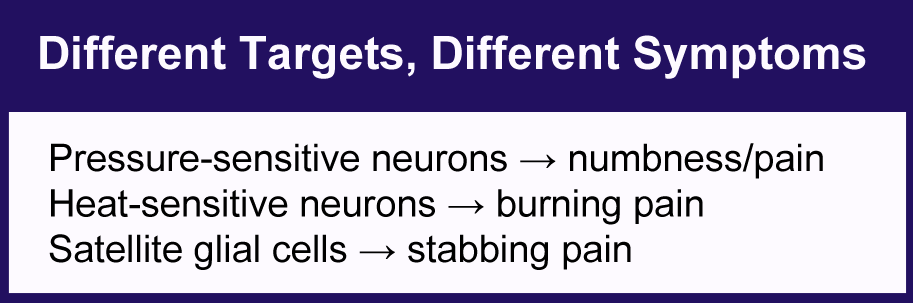
These findings suggest that fibromyalgia may not have one single antibody target. Sommer explains, “I am not proposing one specific fibromyalgia antibody. It is also unlikely that one common epitope explains all the binding to different structures.”
Gut-Immune Connection
Sommer will also look at whether gut-barrier problems help drive immune activity in fibromyalgia. When the gut barrier weakens, bacterial products may slip into the bloodstream and activate the immune system. Two studies suggest this may occur in people with fibromyalgia.3,4
“Although gut changes are documented in fibromyalgia, researchers have not assessed the links between gut-barrier dysfunction and autoantibody production,” says Sommer.
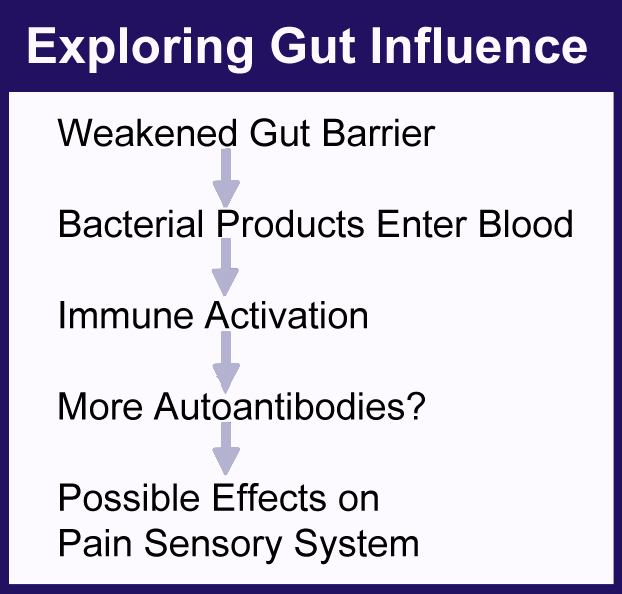
This connection matters because SGCs and nearby neurons may be especially exposed to immune-system changes. They sit outside the central nervous system, where the blood-brain barrier does not protect them.
Sommer will test patients’ blood for gut-barrier markers and signs of immune activation. Then she will see whether these markers track with autoantibody levels.
Toward Personalized Treatment
Today, fibromyalgia treatment is trial and error. Doctors do not yet have blood tests that show which disease process may be driving a person’s symptoms.
“Ideally, this project will use blood markers — including antibody targets, gut-barrier markers, and signs of inflammation — to group fibromyalgia patients based on what may be driving their symptoms,” says Sommer. This could move fibromyalgia treatment closer to personalized care.
Some patients may have autoantibodies that target SGCs, some may have autoantibodies that target neurons, and some may have both. Other patients may not have these autoantibodies.
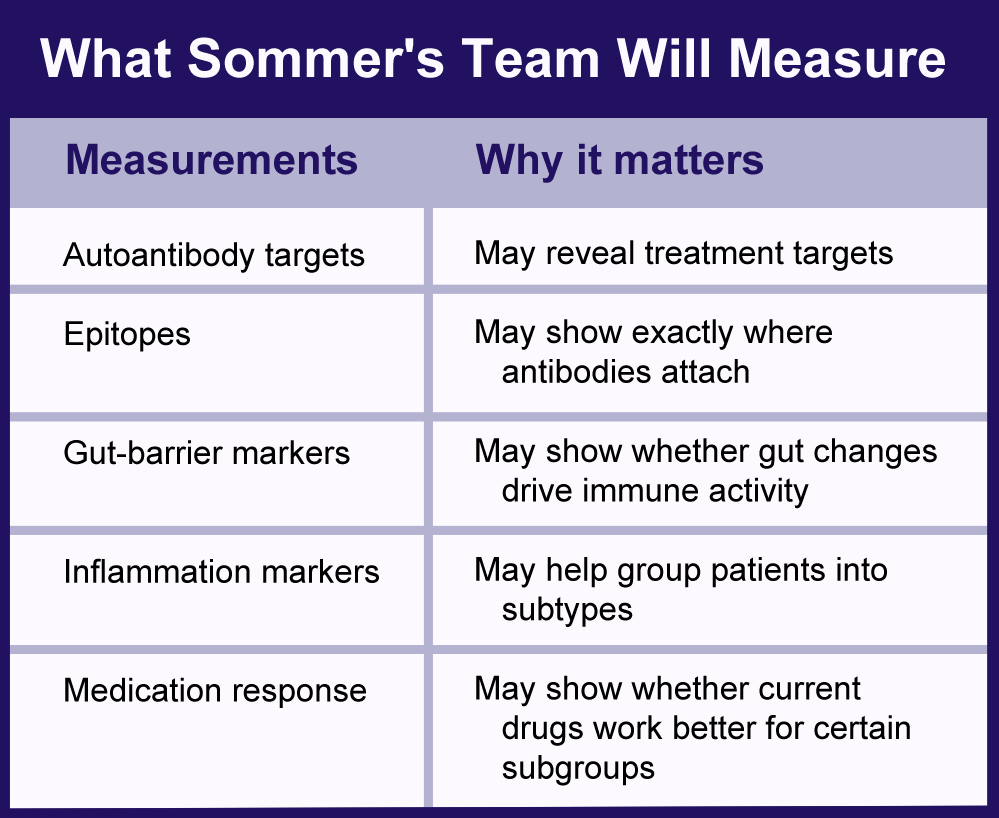
In the future, antibody-positive patients may benefit from immune-based treatments tailored to their subgroup. For now, Sommer will test whether current medicines, such as pregabalin and duloxetine, work better for certain subgroups.
By funding this work, AFSA is helping Sommer’s team take an important step toward blood-based tools that may one day guide more precise fibromyalgia treatment. These tools could also improve diagnostic testing by showing which immune targets are involved in each patient.
First, Sommer’s team must identify the key fibromyalgia treatment targets, learn how they differ among patients, and determine whether a leaky gut contributes to autoantibody production. Second, she will test each subgroup’s response to available medications to identify which patient groups respond best to each class of drugs.
You don’t have to manage fibromyalgia alone. Join AFSA for expert-backed treatment tips and patient-friendly articles delivered to your inbox.
AFSA has funded eight fibromyalgia research projects since June 2024. Your donation helps keep this momentum going.
Symptoms | IgG Transfer Study | Gut Bacteria | New Drug Tonmya
Immune Targets for Fibromyalgia Treatment References
- Goebel A, et al. J Clin Invest. 131(13):e144201, 2021. Free Report
- Seefried S, et al. PAIN 166(8):1922-1933, 2025. Free Report
- Cai W, et al. Neuron 113(13):2161-2175, 2025. Free Report
- Martin F, et al. Front Immunol 14:1253121, 2023. Free Report