DONATE
Donate

Marker Maps Fibromyalgia Pain

Treatment & Research News

Marker Maps Fibromyalgia Pain

Home | Treatment & Research News

Abstract painting of whole body to illustrate that the marker maps body-wide fibromyalgia pain.

A marker that maps fibromyalgia pain could validate what patients already know: their pain is widespread and real. One promising molecule is TSPO, short for translocator protein.

Many immune cells carry TSPO on their surface, especially when they respond to inflammation. This makes TSPO act like a flag that researchers can track while imaging the brain and other tissues. Marco Loggia, Ph.D., from Harvard Medical School, studies how TSPO may help detect inflammation-related pain. His work shows that TSPO signals can map painful areas in the brain, spinal cord, and possibly peripheral tissues.*

Neuroinflammation

To grasp why TSPO matters, it helps to first understand neuroinflammation. The term means ongoing inflammation in the brain and spinal cord. Glial cells drive much of this process. These support cells constantly watch for infection, injury, or other threats. In a healthy nervous system, glial cells respond quickly, help clean up the problem, and then return to their normal watchful state.

“Sometimes these immune responses become problematic,” says Loggia. “Activated glial cells continue unchecked even after the initial threat is resolved. They overstay their welcome and become harmful.” When this happens, glial cells may keep the nervous system inflamed. Researchers call this chronic neuroinflammation and have linked it to diseases such as Alzheimer’s, Parkinson’s, and schizophrenia.

Seeing TSPO Signals

Sampling brain tissue is too invasive. Instead, researchers can use PET, short for positron emission tomography, to image the brain. During PET imaging, doctors inject a small amount of radioactive tracer that attaches to TSPO and creates a signal on the scan.

Healthy brains show very little TSPO. But when neuroinflammation activates glial cells, TSPO levels rise and appear as “hot spots” on PET scans.

Loggia used PET to track TSPO in painful conditions linked to neuroinflammation, including fibromyalgia, low back pain, and migraines. These TSPO hot spots point to activated glial cells, which may help drive persistent pain. The location of the TSPO signal also tells researchers something important: it can show where the body hurts.

Mapping Pain Areas

Loggia’s first PET studies with a TSPO tracer focused on people with chronic back pain. Some patients showed a strong TSPO signal in the cortex, but others did not. Loggia suspected leg pain might explain the difference.
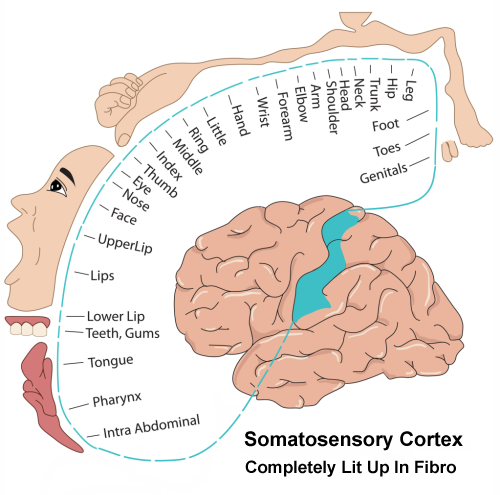
Diagram of the somatosensory cortex to show area that is completely lit up by the TSPO marker that maps fibromyalgia pain.

“Comparing patients with leg pain versus spinal pain, those with added leg pain showed a greater signal in the cortex,” says Loggia. He also measured each patient’s “fibromyalgia-like” score. The higher the score—the more painful body areas reported—the stronger the signal, especially in the somatosensory cortex.1

“The somatosensory cortex contains a full representation of the body,” says Loggia. “Different parts of this cortical region process sensory inputs from different body parts.” In low back pain patients, he says, “We saw a TSPO signal elevation in the cortex that matches the regional representation of back and leg pain.”

Migraines showed a similar pattern. The TSPO signal appeared in the cortical area that represents the face and head.

For fibromyalgia, Loggia says, “We should see the whole somatosensory cortex light up because patients report widespread pain. And that is what we see.”2 An AFSA-funded study later replicated this finding.

No Sex Differences

TSPO appears on immune cells, and the immune system can work differently in men and women. However, Loggia did not find sex differences in his low back pain studies.

Spinal Cord & DRGs

So far, these studies have focused on the brain. Can TSPO also detect pain-related inflammation in the spinal cord? Loggia showed that it can. In people with back pain, TSPO detected inflammation in the spinal cord and nearby structures, including the nerve roots and dorsal root ganglia, or DRGs.3

DRGs contain nerve cell bodies just before the nerves enter the spinal cord. Although DRGs sit outside the cord, TSPO-producing glial cells surround them. This matters for fibromyalgia because researchers suspect the DRGs may help amplify pain signals.

TSPO in Body Tissues

“Wouldn’t it be wonderful to use the same marker to image inflammation in the brain, spinal cord, and peripheral tissues like joints?” asks Loggia. Since many immune cells produce TSPO, it might work as a marker outside the nervous system too.

Loggia tested this idea in people with knee osteoarthritis. He compared PET scans from people with and without knee pain. Like the “hot spots” seen in the brain, TSPO signals appeared strongly in painful knees with arthritis. The signal also showed whether arthritis affected one or both knees.

Knee osteoarthritis is not fibromyalgia, but Loggia’s study found two points that may matter for chronic pain:

  • Stronger TSPO signals matched higher levels of knee pain.
  • TSPO signal strength also matched higher levels of several immune substances in the blood.

Together, these findings suggest that TSPO may help detect pain and inflammation in body tissues, although researchers still need more studies.

Tracking Treatment Response

If TSPO can detect pain and inflammation, it may also help researchers measure treatment response. Fibromyalgia studies often rely on symptom reports, which matter because patients know their pain best. But researchers also need objective tools that show whether a treatment changes pain-related inflammation.
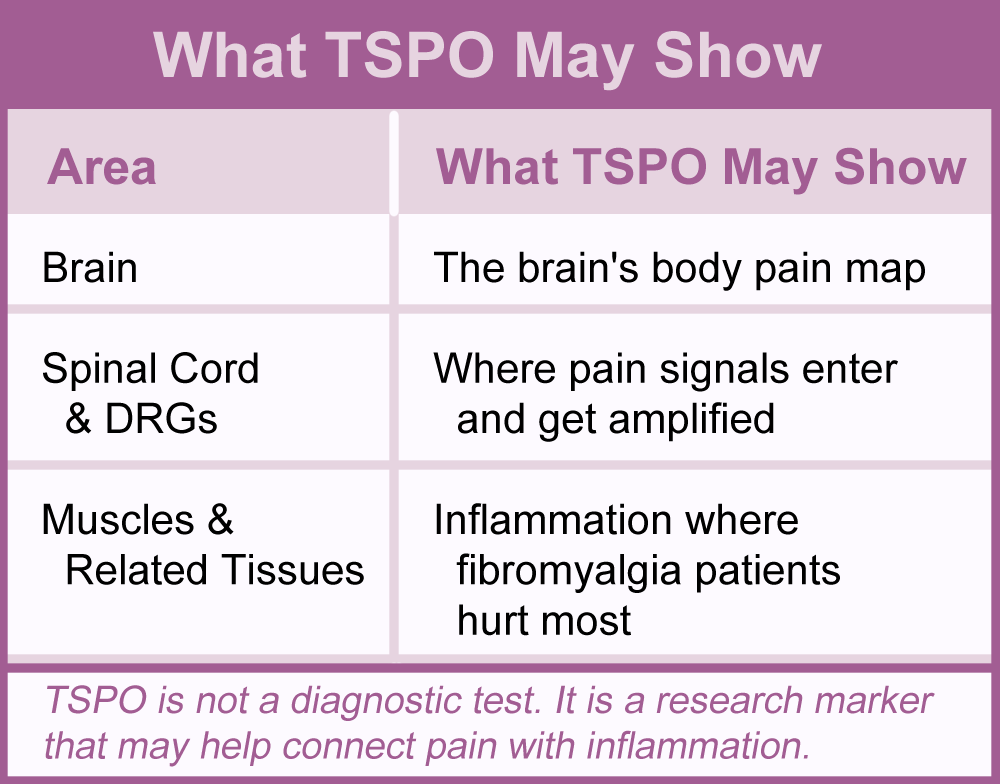
Table shows which fibromyalgia pain areas can be revealed by the TSPO pain marker.

Knee osteoarthritis offers one example. Total knee replacement removes the damaged joint, yet 30 percent of patients continue to have pain. Loggia found that TSPO signals in the brain before surgery helped predict who still had knee pain one year later.

The pre-surgery signal was stronger in patients who still had knee pain after one year. “This suggests that the TSPO signal we are measuring is not an epiphenomenon,” says Loggia. “It appears to have something to do with the establishment or maintenance of persistent pain.”

High-intensity signals in the sensory cortex of knee arthritis patients reflected the “fibromyalgia-like” nature of their pain. This pattern matters because fibromyalgia also involves widespread pain and increased TSPO signals in the sensory cortex. As researchers develop new fibromyalgia treatments, they might someday put them to the “TSPO test” to see whether they quiet pain-related inflammation.

Stay current on fibromyalgia treatment and research news.
Join AFSA’s free membership list for patient-friendly updates.

Future Markers

Loggia highlights TSPO as a marker for chronic pain and neuroinflammation. However, PET imaging with TSPO requires a radioactive tracer, so researchers continue to look for easier tools.

“Many groups around the world are looking at the concentration of brain metabolites believed to be linked to glial cell activity,” says Loggia. Researchers are studying these metabolites in fibromyalgia, but they still need to compare them with TSPO in the same patients. For now, Loggia concludes, “The use of TSPO to image peripheral and central nervous system inflammation (and pain) is opening new doors.”

Mapping Pain Beyond the Brain

AFSA recently funded Loggia to use TSPO imaging in a new way. His team will look for inflammation outside the brain in areas where fibromyalgia patients hurt most, such as their muscles. The goal is not to turn whole-body PET into a diagnostic test. Instead, this study will test whether painful body areas also carry stronger TSPO signals. If they do, this fibromyalgia pain marker could help link immune activity and inflammation to patients’ pain.

TSPO appears on many immune cells, not just glial cells. When inflammation activates these cells, they may produce more TSPO. If the study finds stronger TSPO signals in painful muscles or other tissues, it could help validate the body-wide pain patients describe. It could also guide future treatment research.

Help move fibromyalgia research forward.
AFSA-funded studies like Dr. Loggia’s TSPO project may help validate pain patients feel but others cannot see. Your donation helps support more research toward better answers and treatments.

Donate Now

More About Glial Cells

While Loggia describes TSPO as a pain-mapping marker on immune cells, including glial cells, it helps to know what these cells are doing in fibromyalgia.

Glial Cells in Your Brain – These cells can be your neuron’s best friend, but research shows this is not the case for fibromyalgia patients. Find out what they are doing and what can be done to get them to behave.

Glia Around Your DRG – These cells can control your dorsal root ganglia (DRG) so the signal entering your spinal cord is amplified. Research shows your glia are under attack in fibromyalgia.

Symptoms  |  Medications | Alternative Therapies |  Muscle Pain Relief  |  Fibro Friendly Exercises   

1. Alshelh Z, Loggia ML, et al. Brain 145(3):1098-1110, 2022. Free Article
2. Albrecht DS, Loggia ML, et al. Brain Behav Immun 75:72-83, 2019. Free Article
3. Albrecht DS, Loggia ML, et al. Pain 159(5)968-977, 2018. Free Article

* Neuroinflammation: Does it have a role in human chronic pain? by Marco Loggia, Ph.D., presented at the International Association for the Study of Pain (IASP) World Congress, August 5, 2024.

Continue reading

Targeting the Gut

Treatment & Research News

Targeting the Gut
for treating fibromyalgia

Home | Treatment & Research News

Photo of person taking a capsule for treating the gut microbiota in fibromyalgia.

Your gut bacteria or microbiota form a living community that communicates with your brain. In fact, your microbiota exert significant control over your overall health. Five years ago, Amir Minerbi, M.D., Ph.D., of Israel published a groundbreaking study showing microbiota abnormalities in fibromyalgia.1 Today, treating the gut microbiota in fibromyalgia represents a novel approach.

If studying your gut microbes seems off topic for fibromyalgia, see our article on Gut Influences. Ordinarily, the intestinal bacteria and central nervous system have a “healthy” relationship. But in people with fibromyalgia, the bugs living in the gut are different from healthy, pain-free people. New research by Minerbi’s team reveals that the altered microbiota are linked to fibromyalgia symptoms.2

Transferring Fibro to Mice

Transplanting the microbiota from fibromyalgia patients into the digestive tract of mice causes the animals to become pain sensitive. The process is called fecal microbiota transplantation (FMT).  Alterations in the mouse’s microbiota is linked to increased pain sensitivity during the first two weeks. Not only does the microbiota of the mice mimic that of the fibromyalgia patients, but the mice also develop fatigue. FMT from healthy people does not impact the mouse’s symptoms or microbiota.

Pain Precedes Depression

All too often, fibromyalgia is wrongly dismissed as depression or anxiety. The medical community calls these “affective traits.” Understandably, affective traits negatively impact a person’s health and contribute to reduced pain thresholds. However, it is frustrating for patients to be told that their fibromyalgia is caused by their state of mind.

Pull quote by researcher that fibromyalgia is not depression.

To set the record straight, Minerbi selected fibromyalgia patients who did not have symptoms of depression or anxiety. “It was important to show that pain hypersensitivity is not mediated by affective traits,” says Minerbi. “The fact that pain is detectable in the mice days following FMT but depressive signs arise months later is a hint that pain precedes depression.” As a result, treating gut microbiota in fibromyalgia may reduce pain and prevent the mood disorders.

“The notion of ‘it’s all in your head’ or ‘fibromyalgia is a psychosomatic condition’ should be eliminated from the medical discussion,” says Minerbi. “Patients, families and clinicians need to know this.”

Altered Metabolism

Gut microbes can influence the production of pain-enhancing amino acids like glutamate and alter fat metabolism. The bacteria can also increase the production of bile acids that cause pain, rather than relieve it. These unwanted effects are well-documented in people with fibromyalgia.  And it turns out, the mice receiving FMT develop the same metabolic abnormalities as the patients. Quite possibly, treating the gut microbiota in fibromyalgia patients can decrease glutamate and lead to reduced pain.

The mice didn’t just have increased glutamate in their blood, the concentration of this pain transmitter was also elevated in the central nervous system. This goes to show that transferring microbiota into the gut significantly impacts brain function.

Immune Changes

Your intestines are lined with immune cells. In addition, lymph and a variety of immune cells surround your digestive tract. If the microbiota in the gut is altered in an unhealthy way, the immune system might become actively defensive. This angle was explored by Minerbi’s colleague, Arkady Khoutorsky, DVM, Ph.D.*

Looking at the numbers of immune cells in the blood of mice, Khoutorsky found the memory B cells were nearly depleted. Memory B cells help your immune system remember prior exposures of potentially threatening agents. If the agent enters your body again, your memory B cells pump out antibodies to neutralize the threat. Khoutorsky did another test that showed increased activation of the immune system. 

People with fibromyalgia have activated immune cells in their brain called microglia. Minerbi found these same cells to be on guard in the brains of mice exposed to fibromyalgia FMT. To measure the microglia’s role, he blocked their activation with a medication prior to the FMT. The ability of fibromyalgia microbiota to produce pain sensitivity was greatly reduced. “These results indicate that the development of pain after fibromyalgia FMT is partially mediated by the microglia.”

The Neurons

Most fibromyalgia patients will say their skin burns, their muscles ache, and their brain function is dulled (e.g., fibrofog). It’s hard to believe that the far-reaching effects of fibromyalgia are solely due to malfunctions in the brain and spinal cord. Conversely, if the muscles were the source of disease, how would one explain the common symptoms of fibrofog and sleep disorder?

Prior studies show a misbehaving immune system targets the dorsal root ganglia (DRG) to amplify pain transmissions. But other neurons are also affected. “The DRG is an attractive target,” says Minerbi. “But in our study, there are changes in all levels of the pain-signaling pathways. The peripheral small nerve fibers, the DRG, the spinal cord, and the cortical structures in the brain are all involved.” At least, this is what Minerbi found in the mice when he looked at the effects of FMT from fibromyalgia patients. So, the neurons at all levels of the nervous system may be contributing to your symptoms. 

But how can you relate this finding to the bugs growing in your intestines? Disruption of your gut microbiota leads to activation of your immune system. After all, the immune cells lining your intestinal tract are programmed to protect you from foodborne pathogens. If the bacteria in your gut changes composition, they can also set off alarms targeting all levels of your nervous system. So, treating the gut microbiota in fibromyalgia patients can mute the immune system and reduce pain signals transmitted by the neurons.

FMT in Fibro Patients

A small trial of FMT from healthy subjects to fibromyalgia patients led to a 30 percent reduction in pain. But just doing the FMT alone did not work. Patients had to be given antibiotics before the ten-week trial (five transfers every two weeks).

“The microbiota in the gut is a stable environment,” says Minerbi, “and it’s resilient to transient perturbations. The amount of bacteria we give in FMT is many orders of magnitude smaller than that of the established microbiota in the gut.” So, antibiotics are given to clear out the existing bacteria and allow the transplanted bacteria to take hold.

Based on the success of this small trial, a large placebo-controlled study is underway. Minerbi’s team will be looking at which bacteria improve the most, in addition to alterations in the metabolic and immune system variables.

Researcher quote on identifying bacterial species for treating gut microbiota in fibromyalgia patients.

“We hope this will help explain why certain fibromyalgia patients respond better than others,” says Minerbi. “We also want to identify the biological mechanisms responsible for symptom improvements.”

Designer Treatments

Even if FMT turns you off, it provides much-needed answers from a research perspective. Perhaps the greatest downside of FMT is that it cannot be commercialized. Minerbi points out that some companies already have FDA-approval for microbiota-based therapeutics. Basically, these companies aim to develop specially formulated probiotics to treat illnesses like fibromyalgia.                               

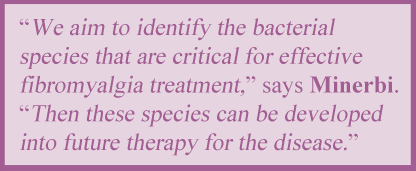
“We aim to identify the bacterial species that are critical for effective fibromyalgia treatment out of the hundreds that are given during FMT,” says Minerbi. “Then these species can be developed into future therapy for the disease. Since fibromyalgia is a diverse condition, there may need to be more than one formulation.” Indeed, treating the gut microbiota in fibromyalgia patients may be tailored based on one’s microbial composition.

In the Meantime …

If you are tempted to purchase multiple probiotics to tame your fibromyalgia symptoms, press the pause button. Hundreds of bacterial species live in the gut but only a few are contributing to your symptoms. On the other hand, Minerbi says that the probiotics on the market do not contain any species suspected to be involved in the disease. You are also up against the fact that your existing microbiota community is resilient to change.

It’s frustrating to know that a disruption of your microbiota is likely linked to your symptoms, but you can’t just correct it with probiotics. Until designer treatments become available, Minerbi recommends a low-sugar and gluten-free diet, exercise regularly, and get plenty of sleep. See Diet & Nutrition for assistance. These measures are known to help maintain a healthy community of gut bacteria.

Research takes time, and this is frustrating to hear. But keep in mind that seven years ago the microbiota was not known to be involved in fibromyalgia. “The results are promising, so there is hope on the horizon,” says Minerbi.

AFSA funded six projects in the past two years, and one award went to Dr. Minerbi to expand his amazing research.  Help us fund more studies in 2026.

Donate Today

Stay Current on Treatments & Research News. Sign up for a Free Membership today!

Symptoms  |  Medications | Alternative Therapies |  Muscle Pain Relief  |  Fibro Friendly Exercises   

*  Minerbi’s team of collaborators include Yoram Shir, M.D., Arkady Khoutorsky, DVM, Ph.D., and Emmanuel Gonzales, Ph.D., of McGill University in Canada and Nicholas Bremerton, Ph.D., of University College in Dublin.

  1. Minerbi A, et al. PAIN 160:2589-2602, 2019. Free Abstract
  2. Cai W, Shir Y, Minerbi A, Khoutorsky A, et al. BioRxiv Oct 28, 2023. Free Report

Continue reading

Exercise Difficulties in Fibromyalgia

Treatment & Research News

Exercise Difficulties in Fibromyalgia

Home | Treatment & Research News

Photo of woman showing exercise is difficult for fibromyalgia patients

Exercise floods the body with feel-good endorphins, clears the mind, and ramps up the cardiovascular system. It’s invigorating, unless you have fibromyalgia. The processes controlling cardiovascular workouts do not work correctly, causing exercise difficulties in fibromyalgia patients.

Dane Cook, Ph.D., of the University of Wisconsin, says, “People with fibromyalgia show an abnormal response to gentle exercise.” 1 According to a report by Bruno Gualano, M.D., of Brazil, fibromyalgia patients do not accelerate their heart rates adequately during increased activity.2 And a study by Jose Parraca, Ph.D., of Portugal, shows that the oxygen supply to the muscles is impaired (even at rest) in patients.3 In fact, all three reports explain why you have problems exercising with fibromyalgia.

The above studies highlight a variety of reasons why you encounter difficulties with overexertion. Yet, understanding what you are up against will help you tailor activities to accommodate your dysfunctional response to exercise.

System Controllers

Control of heart rate is based on input from two different nerve branches: your sympathetic (fight or flight) and your parasympathetic (rest and digest). Together, they make up your autonomic nervous system—it’s the network of nerves that communicate between your spinal cord and your peripheral tissues (e.g., your muscles and organs).

Diagram showing how the sympathetic nervous system dominates to cause exercise difficulties in fibromyalgia patients.

To ensure your organs respond appropriately to any challenge, your nervous system must be responsive and flexible. The control dials for either branch must be capable of going from zero to zoom in a split second. Let’s face it, your environment and activity levels are constantly changing, so a flexible autonomic system is essential.

The diagram shows how the two opposing on/off inputs from your sympathetic and parasympathetic nerves control your heart rate. Think of it like two kids on a seesaw that works best if balanced (i.e., both children weigh the same). Yet the timing from one lift off to the next varies, just like your heartbeat, because the system has built-in flexibility.

If you dash out of a burning house, your adrenaline-controlled sympathetic branch should kick in to get your body moving and your heart pumping. If you are digesting your dinner or trying to fall asleep at night, the calming actions of your parasympathetic branch should take over.

Low Heart Rate

People with fibromyalgia have too much sympathetic nervous system activity, even when relaxing.4 Mild challenges to the body, such as standing up or being exposed to cold, may also lead to unwanted symptoms. When switching from reclining to standing, your heart should pump more blood to the brain to prevent lightheadedness. Exposure to cold requires increased circulation of warm blood to your extremities to prevent Raynaud’s-like symptoms (painful spasms in the hands and feet).

Photo of a heart rate monitor showing heart rate does not increase during exercise to make it hard for fibromyalgia patients.

Reduced heart rate in response to exercise is a risk factor for cardiovascular disease. This prompted Gualano to look at the differences in cardiac functions between fibromyalgia patients and healthy controls during exercise. Not only did he measure the heart rate at peak exercise capacity, but he also looked at how fast the heart slowed down after ceasing activity. Ideally, the heart rate should increase rapidly to adjust to the body’s physiologic demands, but once resting, its rate should drop quickly.

“Fifty-seven percent of the fibromyalgia patients exhibited slow heart rate response to exercise, but none of the healthy controls,” says Gualano. “The reduction in heart rate was also slower in the fibromyalgia group during the two minutes post-exercise.”

Why was the heart rate so low in people with fibromyalgia? Gualano says, “The autonomic nervous system is not as flexible as it should be.” Activity ought to prompt the sympathetic system to get the heart pumping while forcing the calming parasympathetic branch to withdraw control. The reverse should occur during rest, yet an imbalance called dysautonomia exists, causing exercise difficulties in fibromyalgia.

The cause of dysautonomia remains unclear. Gualano emphasizes the sympathetic system is super-charged at rest and unresponsive when challenged. A hyperactive sympathetic system leads to a chronic pounding on the receptors in the heart that help regulate how fast it beats. After a while, these receptors become indifferent to the sympathetic system’s demands, which makes the heart less responsive to activity challenges.

Fibro is to Blame

Could Gualano’s finding be due to a lack of exercise or a reduced fitness level? Or could symptom severity play a role? The answer is no, based on two reports from another Brazilian team.

The first study compared fibromyalgia patients to healthy controls who were matched for their level of physical fitness.5 Despite the same fitness levels, the fibromyalgia group had a reduced heart rate response to an exercise challenge. The speed at which their heart rate returned to resting levels was also slower. In addition, measures of autonomic nervous system function revealed an imbalance between the sympathetic and parasympathetic branches.

The above findings run counter to what is known about exercise and fitness levels, at least in healthy people. When a healthy person becomes sedentary, their sympathetic and parasympathetic systems become unbalanced, but they can correct this with exercise. So, the same research team sought to answer another question: could the dysautonomia in fibromyalgia be related to symptom severity?

Dividing fibromyalgia patients into two groups based on symptoms, moderate and severe, they compared fitness measures and autonomic functions to a healthy group.6 Although the level of physical fitness was worse for the severe fibromyalgia group (compared to the moderate), their autonomic nervous system function was equally impaired. 

What does this mean for you? Lack of exercise or symptom severity do not appear to contribute to your level of dysautonomia. In fact, the sympathetic dominance with reduced parasympathetic activity is likely adding to your fibromyalgia symptoms, rather than being the result of inactivity.

Altered Response

If exercise does not increase heart rate appropriately, what about the rest of your cardiovascular system? Cook’s team looked at how this system worked in fibromyalgia patients (compared to controls) while performing mild exercise. He found the heart pumps harder during exercise in fibromyalgia patients, and the rest of the cardiovascular system doesn’t keep up.

“These results indicate that exercise for fibromyalgia patients is more difficult than for healthy individuals on many levels … but it doesn’t mean that increasing physical activity won’t help some of these abnormalities.”

Muscles Lack Oxygen

To increase delivery of oxygen and nutrients to your muscles, your sympathetic constricts blood vessels to speed up the flow. However, your parasympathetic is responsible for relaxing or expanding the arteries so that a larger quantity of blood can be delivered.

Given the studies showing an overpowering sympathetic system with inadequate parasympathetic activity, are your muscles getting the oxygen they need? No.

Parraca’s team in Portugal assessed the amount of oxygen delivered before, during and after exercising the thigh muscle in fibromyalgia patients and healthy subjects. The healthy group showed an increase in oxygen consumption during the exercise, while there was virtually no change in the patient group. Even at rest, the oxygen supply was significantly less and contributing to exercise difficulties in fibromyalgia.

Another finding by Parraca’s team shows that people with fibromyalgia experience a 50 percent drop in saliva secretion during exercise.7 Why is this important? Saliva flow is controlled by your parasympathetic system, and its dramatic decline is a sign of dysautonomia. It also explains why you may develop dry mouth when you exercise or overexert yourself.

Staying Active

Intense exercise will set you back, so the best you can do is move regularly at your preferred pace. If you maintain your own natural speed (which is much slower than healthy people), energy consumption is optimized. Moving too fast or vigorously may force your muscles to operate without enough oxygen and lead to more symptoms.

Another study shows that a self-paced program (on land or in the water) leads to slow improvements in speed over two to three months.8 Benefits in physical function take time. Any attempts to rush progress will likely lead to problems exercising with fibromyalgia.  However, if you can keep up a slow and steady pace, you may also notice improved coordination and cognition.

One more point: make use of warm water. Heat invokes the parasympathetic system to relax your blood vessels to help your muscles receive more oxygen and nutrients. In addition, you have heat sensors in your tissues that work to help relieve pain. If you are struggling with an exercise program, warm water therapy may be the solution for you. If this is not feasible, try taking a hot shower or bath just before working out. Alternatively, you might purchase a portable hot tub. If you get a four-seater, you can do gentle stretches in the center before doing land-based exercises.

Stay Current on Treatments & Research News: Sign up for a Free Membership today!

Research holds the key to better treatments. AFSA funded seven projects in the past two years. Help us keep the momentum going!

Donate Today

Symptoms  |  Medications | Alternative Therapies |  Muscle Pain Relief  |  Fibro Friendly Exercises   

References for Exercise Difficulties in Fibromyalgia

  1. Cook DB, at al. Med Sci Sports Exerc 44(6):1186-93, 2012.
  2. Da Cunha Ribeiro RP, Gualano G, et al. Arthritis Res Ther 13:R190, 2011.
  3. Villafaina S, Parraca JA, at al. Biomedicines 11:132, 2023. Free Report
  4. Lerma C, at al. Arthritis Ther Res 13:R185, 2011.
  5. Schamne JC, et al. J Clin Rheumatol 27(Suppl 2):S278-S283, 2021. Abstract
  6. Sochodolak RC, at al. J Exerc Rehabil 18(2):133-40, 2022. Free Report
  7. Costa AR, Parraca JA, at al. Diagnostics 12:2220, 2022. Free Report
  8. Tiinus PM, at al. J Sports Sci Med 1(4):122-27, 2002.

Continue reading

Giving LDN Your Best Shot

Treatment & Research News

Low-Dose Naltrexone for Fibromyalgia
… How to Give LDN a Fair Trial

Home | Treatment & Research News

Woman considering LDN for fibromyalgia but wondering about side effects and whether to take it in the morning or at night before bed.

Is LDN worth trying when standard fibromyalgia drugs often disappoint or cause side effects? That is the question many patients ask when they hear about low-dose naltrexone for fibromyalgia.

LDN is not FDA-approved for fibromyalgia, and it is not a quick fix. But it is usually well tolerated, its side effects are often mild, and it works differently from the medications most patients are first offered. Instead of targeting nerve cells directly, LDN appears to quiet overactive immune cells in the central nervous system called microglia, which may help turn down the volume on pain, fatigue, poor sleep, and brain fog.

Success Rate

What are the odds that LDN will help you? In the AFSA-funded clinical trial, Sean Mackey, M.D., Ph.D., a pain specialist at Stanford University in Palo Alto, CA, helped evaluate LDN for fibromyalgia. The study found roughly one out of three patients achieved at least a 30 percent improvement in pain.1 The drug produced similar benefits in fatigue and sleep.

Although the AFSA trial only involved 30 patients, it was placebo controlled. It compared how patients felt when they were taking the drug versus how they felt when they were taking a placebo sugar pill.

Nicholas Aitcheson, M.D., a rehabilitation and pain specialist in Queensland, Australia, says, “Around 200 patients have tried LDN for fibromyalgia in our chronic pain clinic. Anecdotally, one-third reaped significant positive results in pain reduction and improved function.” Reports from other pain clinics have found similar results.

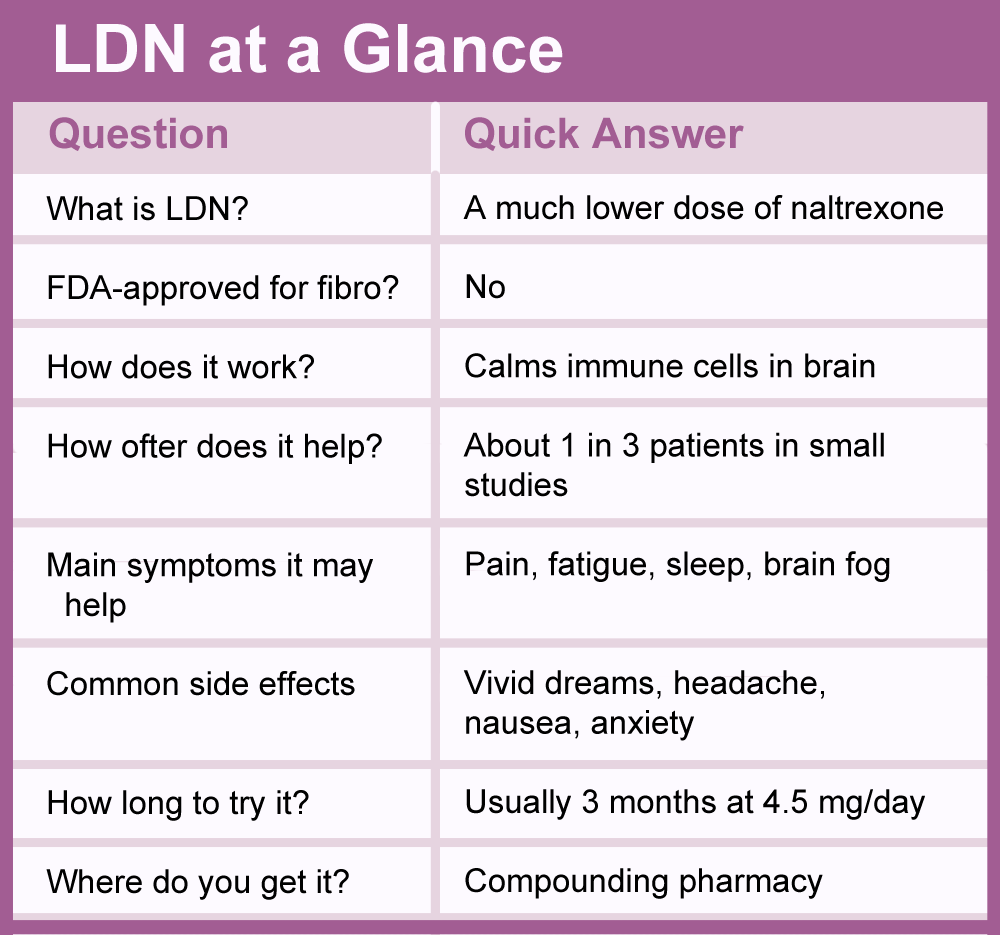
Table providing short questions and answers about LDN use, such as dosing, common side effects, and symptoms it may help.

Getting LDN Made for You

LDN may work as well as, or possibly better than, some medications used for fibromyalgia. The catch is access. Most local pharmacies stock naltrexone only as a 50 mg tablet. LDN requires a much smaller dose, so a compounding pharmacy must prepare it for you.

Insurance usually does not cover compounded LDN. “Even so, the cost is often modest. Some pharmacies charge as little as 64 cents per day.”

“Some patients and physicians are nervous when using a medication that needs to be compounded,” says Aitcheson. To ease those concerns, he adds, “Naltrexone has been used safely for at least 40 years.” He also points out that LDN uses less than one-tenth of the standard naltrexone dose.

Using a compounding pharmacy adds a few extra steps. Anne Marie McKenzie-Brown, M.D., a pain specialist at Emory University in Atlanta, GA, explains the process in our companion article on Compounding Pharmacies.

Physician advice on how long patients should try LDN.

Dosing LDN for Fibromyalgia

The most common dose of LDN is 4.5 mg/day, but the range is from 1.5 to 9 mg.2 One dose does not work for everyone. Most fibromyalgia patients take LDN at night, so any side effects are less likely to affect morning function.

“I just recommend that patients start at 4.5 mg LDN at night,” says Mackey. “I don’t think that there is anything magical about that dose.” The fibromyalgia trial used 4.5 mg, and many patients end up near that dose.

If LDN causes vivid or colorful dreams, Fishman recommends taking it in the morning instead. Other side effects may include headache, nausea, or anxiety. These symptoms are usually mild and uncommon. If they persist, your doctor may lower the dose to 3 mg.

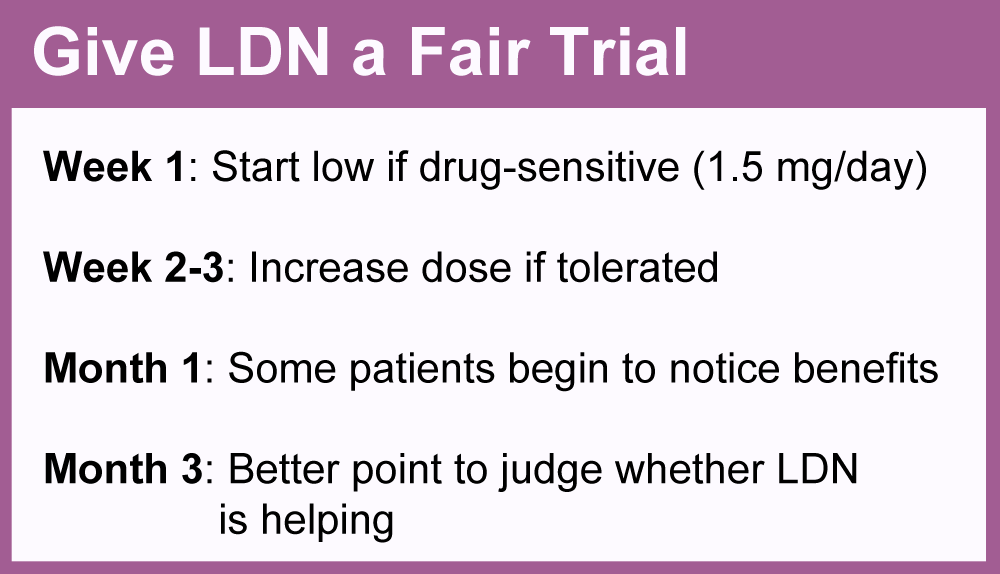
Table providing a strategy for dosing up on LDN and how long patients should try it before giving up.

Drug-sensitive patients may need a slower start. Aitcheson begins with 1.5 mg per day for one week. He increases the dose to 3 mg the second week. By the third week, he moves patients to 4.5 mg per day. During this phase, he prescribes 1.5 mg compounded capsules.

McKenzie-Brown uses a similar schedule. She often starts patients with half of a scored 3 mg tablet for one to two weeks. If they tolerate it, they increase to 3 mg and later to 4.5 mg if needed. Some patients stay at 3 mg because it provides enough relief.

Be Patient

Low-dose naltrexone does not work quickly. In the fibromyalgia trial, patients took about a month to notice improvement. Aitcheson and McKenzie-Brown both recommend staying on 4.5 mg per day for three months before you give up on LDN.

McKenzie-Brown published a study on LDN use in her chronic pain clinic.3 She found that 12 percent of patients did not get pain relief until after three months. In other words, some patients need more time than they expect.

“I ask patients to reserve judgement on LDN efficacy until the end of three months,” says McKenzie-Brown. “Many patients have told me that they would have stopped LDN, but they are glad they did not.”

Want more treatment guidance like this? Join AFSA’s free email newsletter for patient-friendly updates on fibromyalgia research and treatment options.

Waiting for LDN to Work

While you give LDN time to work, your doctor may also recommend nonopioid medications, physical therapy, aquatic therapy, or other approaches that support symptom relief.

Increasing the Dose

If LDN reduces your symptoms, you may wonder if a higher dose would help. Mackey says he handles this decision “on a case-by-case basis” because “there aren’t any guidelines to direct us in this phase.”

“For the vast majority of people,” says Aitcheson, “going above 6-8 mg per day is not likely to be worth it.” Trying a higher dose requires a new prescription, so talk it over with your physician at a follow-up visit.

LDN and Opioids

Naltrexone blocks opioid receptors, so patients often ask whether they must avoid opioids while taking LDN. The answer depends on the dose, timing, and how often you use the opioid.

Physician comment on using LDN for treating chronic pain.

If you take an opioid only on bad days, your doctor may still consider LDN. Some patients take the opioid during the day and LDN at night. “Patients may not notice any difference in the opioid’s effectiveness,” says Mackey. “Or they may experience a reduced benefit of the opioid due to the LDN.”

If you take tramadol (a weak opioid) or another opioid, Fishman may still recommend LDN. But he starts patients on a lower dose of 1 mg per day and increases 0.5 mg per week until the 4.5 mg dose is reached.

Patients who take opioids around the clock need extra caution. In these cases, Fishman may start with very low-dose naltrexone, at 0.5 mg or less. Aitcheson adds that patients on opioids should expect more gastrointestinal side effects during the first few weeks of LDN.

“In this era of the opioid epidemic where opioids were prescribed when all else failed for chronic pain,” says Fishman, “we need to consider positioning alternative strategies early on, including LDN.”4

Keep Fibromyalgia Research Moving
AFSA helped put LDN on the fibromyalgia research map, and we have funded eight projects in in the past two years. Your gift helps fund more fibromyalgia treatment studies.

Donate Today

Learn your LDN compounding options and costs.

Symptoms  |  Medications | Alternative Therapies |  Muscle Pain Relief  |  Fibro Friendly Exercises   

LDN for Fibromyalgia References

If your doctor is hesitant to prescribe LDN for your fibromyalgia, here’s a great article: Aitcheson N, et al. Aust J Gen Pract. 2023. Low-dose naltrexone in the treatment of fibromyalgia: A systematic review and narrative synthesis 52(4):189-195. Free Report

  1. Younger J, Mackey S, et al. Arthritis Rheum 65(2):529-538, 2013. Report (free to read)
  2. Bruun-Plesner K, et al. Pain Med 21(10):2253-61, 2020. Report
  3. McKenzie-Brown AM, et al. J Pain Res 16:1993-1998, 2023. Free Report
  4. Kim PS, Fishman MA. Curr Pain Headache Rep 24:64, 2020. Abstract

Continue reading

Is Fibro an Autoimmune Disease?

Treatment & Research News

Is Fibro an Autoimmune Disease?

Home | Treatment & Research News

Photo of mouse in lab coat for fibromyalgia research study.

Could something in your blood be causing fibromyalgia? Yes, says  Andreas Goebel, M.D., Ph.D., of Liverpool, UK, along with his collaborators at King’s College London and the Karolinska Institute in Sweden.* The researchers injected mice with serum from fibromyalgia patients and within two days the rodents developed widespread pain. The mice also exhibited signs of fatigue and reduced muscle strength. 

Why the symptoms develop is unclear but Goebel’s research points to the possibility that fibromyalgia is an autoimmune disease.

The immunoglobulin G (IgG) portion of the serum is loaded with antibodies and appears to be the pain-producing culprit. Mice injected with fibromyalgia serum devoid of the IgG fraction failed to cause symptoms. But could it be that human IgG makes mice pain-sensitive, regardless of the source (healthy controls or fibro patients)? No. Serum from healthy subjects didn’t produce symptoms in the mice.

Goebel suspects the IgG contains an autoreactive component that causes your many symptoms. But how can this be possible in the absence of tissue damage that normally exists in autoimmune diseases? Goebel says the antibodies can attack the sensory nerves or nearby cells to change their function (not destroy them). As a result, the nerves generate more pain signals traveling to the spinal cord.

Pain-Producing Antibodies

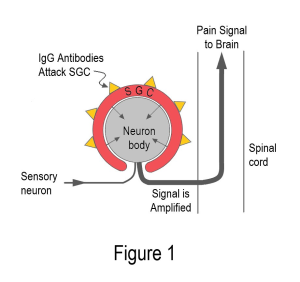
Examining the serum-injected mice revealed IgG antibodies clustered around special immune cells called satellite glial cells (SGCs). As shown in Figure 1, the SGCs surround the cell bodies of the sensory nerves. Antibodies on the surface of SGCs can amplify sensory signals just before they enter the spinal cord. In addition, antibodies in the IgG can increase the amount of distress chemicals secreted by the SGCs. Not only do these chemicals activate the sensory neurons, but they can also enter the cerebral spinal fluid to cause havoc in the central nervous system.

Diagram showing how fibromyalgia is an autoimmune disease.

Widespread pain without tissue destruction is a credibility nightmare for fibromyalgia patients. Yet, Goebel simply injected fibromyalgia serum into mice to cause pain and other symptoms. This study certainly lays the groundwork for showing fibromyalgia is an autoimmune disease.

“Antibody-mediated immune processes in chronic primary pain (such as fibromyalgia) have been hiding in plain sight,” says Goebel. He adds that the antibody attack on the SGCs can’t be imaged, and lab tests cannot detect this process. Goebel’s findings also challenge the assumption that a person’s pain level corresponds to the degree of visible tissue destruction. 

Injecting serum from patients into rodents is called a passive transfer study. It’s only been done in a few other diseases. Although the current project involved patients from two different centers, the findings need to be replicated. 

One last point: people are not mice. How do the researchers know the SGCs are the cells under attack in humans? Goebel’s colleagues incubated the antibodies from fibromyalgia patients and healthy controls with SGCs taken from seven post-mortem subjects (none had fibromyalgia). Using a fluorescent dye and electron microscopy, only the antibodies from fibromyalgia patients heavily coated the SGCs. It’s as though the fibromyalgia antibodies are drawn to the SGCs like iron to a magnet.

Game Changer for Fibromyalgia

If Goebel’s work stands the test of time, fibromyalgia will be an autoantibody type of pain. This could be a game changer for fibromyalgia research because the condition is currently viewed as a dysfunctional central nervous system. Admittedly, the brain and spinal cord do not operate properly, but the cause remains unknown. However, if antibodies are disrupting the SGCs, this could be the autoimmune trigger that causes the nervous system commotion.

Research points to multiple abnormalities in the central nervous system. The spinal cord contains chemical imbalances. The pain control system doesn’t work, and the brain centers fail to contain the barrage of pain signals. Sleep is disrupted, hormones are dysregulated, and cognitive functions are diminished.

The foregoing findings are often packaged into the central sensitization theory to explain pain without a triggering source. It assumes that the central nervous system is hypersensitized to incoming sensory signals, but no one knows why. This, in turn, leads to an abnormally exaggerated response. In the case of fibromyalgia, a harmless trickle of nerve impulses is transformed into widespread pain and other symptoms.

“Some say you don’t need a driving source to sustain central sensitization,” says Goebel, “but it has never been shown convincingly in any animal model. That’s why many of us (physicians and researchers) never really believed it.” Based on the passive transfer study, it’s more plausible that fibromyalgia is an autoimmune disease.

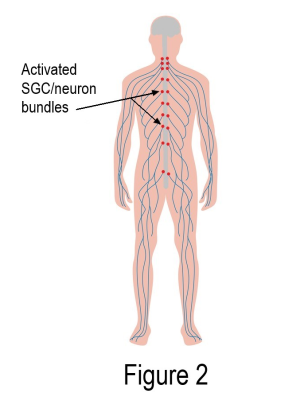
IgG with autoreactive antibodies clustered around the SGCs may be the missing piece to the fibromyalgia puzzle. As shown in Figure 2, activated SGCs form a pain-generating circuitry up and down both sides of the spinal cord (each red dot represents thousands of SGC/neuron units). Hurting from head to toe would be expected, not questioned! The spinal cord and brain would naturally be thrown into turmoil.   

Whole body diagram of satellite glial cells in fibromyalgia under attack by an autoimmune disease

Study Implications

Wondering why your body is generating antibodies that adhere to the SGCs? Examining the mice won’t answer this question. “Our model takes it from the point where the IgG antibodies are already produced,” says Goebel. However, dissecting the tiny fraction of the IgG that is pathogenic (autoreactive) could lead to a disease marker. Goebel’s colleagues in Sweden are working on this.

Your B cells make the antibodies in your IgG. If your antibodies are misbehaving, it is caused by a problem with your B cells. Your antibodies are just doing what your B cells programmed them to do. It’s your B cells that need a closer look and fortunately, this is part of a recently approved AFSA study.

What about treatments? The fibromyalgia-like symptoms go away once the IgG antibodies work their way out of the mouse’s body. So, approaches that dislodge the IgG antibodies from the SGCs should work, even if they do not stop the antibody production.

Currently, therapies in this category are extremely expensive and not yet available to fibromyalgia patients. However, a small “proof-of-concept” type of trial is underway to test an intravenous drug called rozanolixizumab. 

Alternatively, medications that reduce SGC activation may help. For example, low-dose naltrexone targets specific receptors on the SGCs to quiet them down. While removing the harmful antibodies from the SGCs is more effective, this approach is available and cheap.

Presuming autoantibodies to your SGCs are driving your symptoms, this may explain why medications that work in the spinal cord produce dismal results. Examples include the three FDA-approved drugs (pregabalin, duloxetine, and Savella) that operate downstream of the SGCs. Using them could be the equivalent to putting a bucket under a leaky faucet, while targeting the SGCs would be more akin to repairing the faucet.

Bottom Line

Fibromyalgia will gain more credibility once Goebel’s work is replicated and the word spreads about the passive transfer study. Many physicians might remain skeptical about the cause of your symptoms, especially given that roughly half view fibro as psychologically induced. However, over time, doctors might be willing to consider that fibromyalgia is an autoimmune disease. Admittedly, it is not the classical type of autoimmunity that causes tissue destruction but rather changes in cellular function.

In the meantime, Goebel’s mouse model is still useful for fibromyalgia research. Examining serum-injected mice can highlight what the SGCs are doing to cause symptoms. In addition, the mouse model may assist with developing possible treatments. It could be a long road ahead, but at least research will be moving in the right direction.

Stay Current on Treatments & Research News: Sign up for a Free Membership.

Your support helps move fibromyalgia research forward. AFSA has funded seven studies in the past two years, all focused on diagnostic markers and more effective treatments.

Donate Now

Symptoms  |  Medications | Alternative Therapies |  Muscle Pain Relief  |  Fibro Friendly Exercises   

*  Goebel A, Krock E, Gentry C, et al., 2021. Passive transfer of fibromyalgia symptoms from patients to mice. J Clin Invest. 131(13):e144201. Free Report

Continue reading